





Despite driving a significant portion of Zimbabwe's economy, women and youth-led enterprises remain trapped in a cycle of limited growth, hindered by persistent barriers to formal credit.
A new partnership between the United Nations Development Programme and the National Building Society (NBS) now seeks to bridge this critical financing gap by unlocking private capital for small-scale entrepreneurs who have long been overlooked by conventional banking.
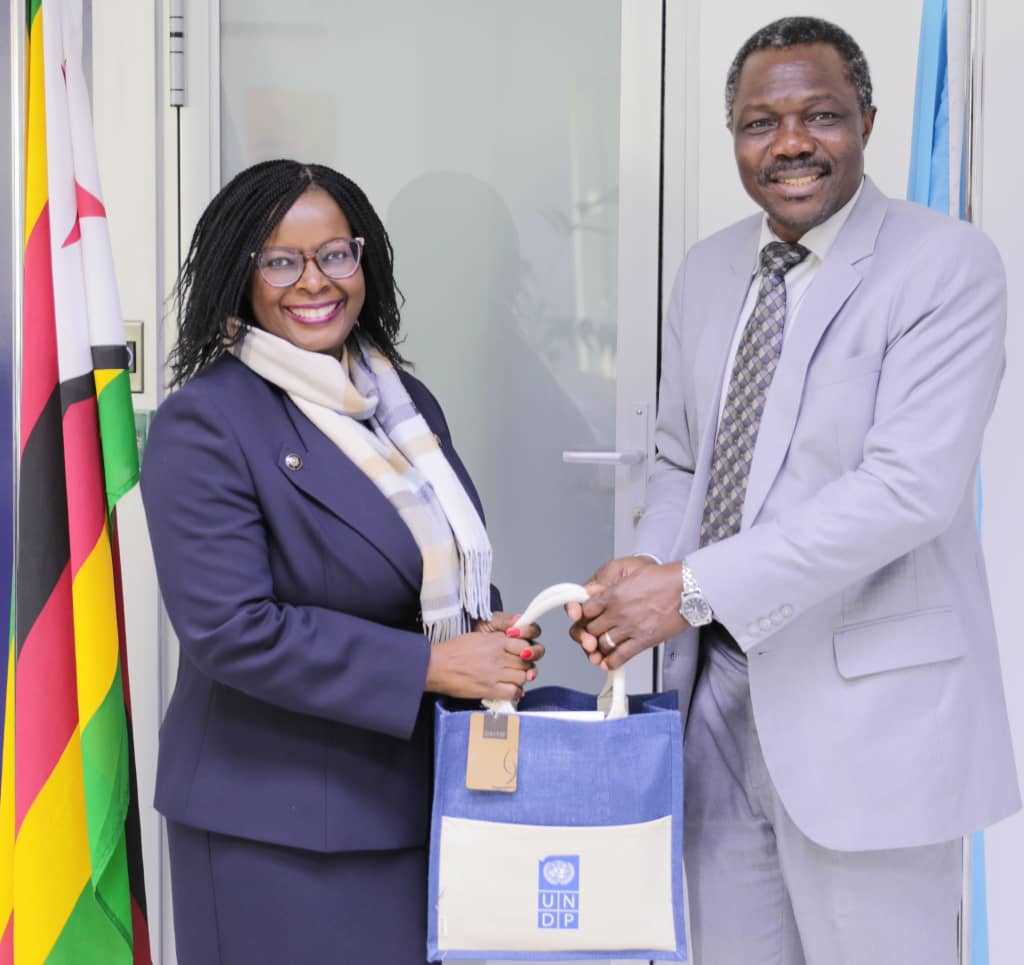
The initiative, announced following a meeting between UNDP Zimbabwe Resident Representative Ayodele Odusola and NBS Managing Director Mukai Mahachi, aims to accelerate Sustainable Development Goal-aligned investments, expand green housing finance, support women- and youth-led enterprises and mobilise innovative financing solutions for community development.
Explaining the rationale behind the partnership, Odusola said the challenge was no longer whether private investment could contribute to development, but how it could be mobilised responsibly.
"The question is not whether private capital can support development, it is how we crowd it in responsibly while protecting equity and public value," Odusola said.
National Building Society said the collaboration is intended to translate dialogue into practical investment opportunities.
"Together, UNDP and NBS are exploring practical pathways to mobilise finance, support women and youth-led enterprises, and scale sustainable development solutions across Zimbabwe," the bank said following the
The announcement comes as Zimbabwe increasingly turns to the private sector to help finance development at a time when fiscal pressures continue to constrain public spending. Yet economists argue that signing partnerships alone will not solve the financing crisis facing thousands of entrepreneurs unless long-standing structural barriers within the financial system are addressed.
The scale of the challenge is substantial.
According to the 2022 FinScope Micro, Small and Medium Enterprises Survey, Zimbabwe has approximately 1.6 million micro, small and medium enterprise owners, whose businesses contribute an estimated US$8.6 billion to the economy while employing around 1.7 million people. Women own approximately 56 percent of these enterprises, making them central to employment creation, household incomes and economic resilience.
Related Stories
Despite this contribution, access to affordable finance remains one of the sector's greatest constraints.
Economist Gift Mugano has consistently argued that Zimbabwe's financial sector should prioritise productive investment over short-term commercial lending, warning that without affordable long-term capital, small businesses remain trapped at subsistence level instead of growing into companies capable of creating employment, increasing exports and driving industrialisation.
In an interview financial inclusion specialist Rachael Moshosho explained why women continue to struggle to secure loans from conventional financial institutions.
"Women here typically don't possess assets or collateral. Women are good at repaying their loans, but they lack the required collateral that formal conventional banking institutions require."
She said expanding the use of movable assets and strengthening credit guarantee mechanisms could significantly improve women's access to formal finance.
"Finding mechanisms for them to employ those assets... can go a long way to closing the gender gap."
Zimbabwe has introduced several reforms intended to address these barriers. The Reserve Bank of Zimbabwe established a Collateral Registry, allowing borrowers to use movable assets such as machinery, livestock and vehicles as security for loans, while credit guarantee facilities have been introduced to reduce lending risks for banks. Even so, access to credit remains limited for many entrepreneurs.
Research by the Alliance for Financial Inclusion shows that although micro, small and medium enterprises account for a significant share of Zimbabwe's economic activity, they continue to receive only a relatively small proportion of total commercial bank lending, highlighting the disconnect between the sector's economic contribution and access to formal finance.
The United Nations Development Programme believes improving financial inclusion is also critical if women- and youth-led enterprises are to take advantage of opportunities presented by the African Continental Free Trade Area. Better access to finance, markets and business support could enable these businesses to integrate into regional value chains, expand exports and contribute more meaningfully to Zimbabwe's industrialisation agenda.
Yet entrepreneurs continue to face high borrowing costs, stringent lending conditions, inadequate collateral, foreign currency constraints and short loan tenures, all of which discourage investment and business expansion.
The partnership between UNDP and NBS arrives at a pivotal moment. Women and youth entrepreneurs already sustain much of Zimbabwe's enterprise economy, but their ability to grow remains constrained by a financial system that many say is still designed for established corporates rather than emerging businesses.





Leave Comments